Hardware that moves oxygen. Software that measures it.
Three layers, built to be commissioned against written criteria and read out as numbers. Nothing on this page is a projection; where a figure appears it comes from the pilot dataset or the equipment specification.
Nanobubble oxygenation
Bubbles measured at around 100 nm on a nanobubble particle counter do not rise and vent at the surface the way aerator bubbles do; they stay in the water column, which is what lets dissolved oxygen be held above saturation rather than merely topped up. NovaAquatech's units are built on Japanese-origin patented ceramic bubble-generation technology (US 8,919,747 B2), integrated through our own 3P design.
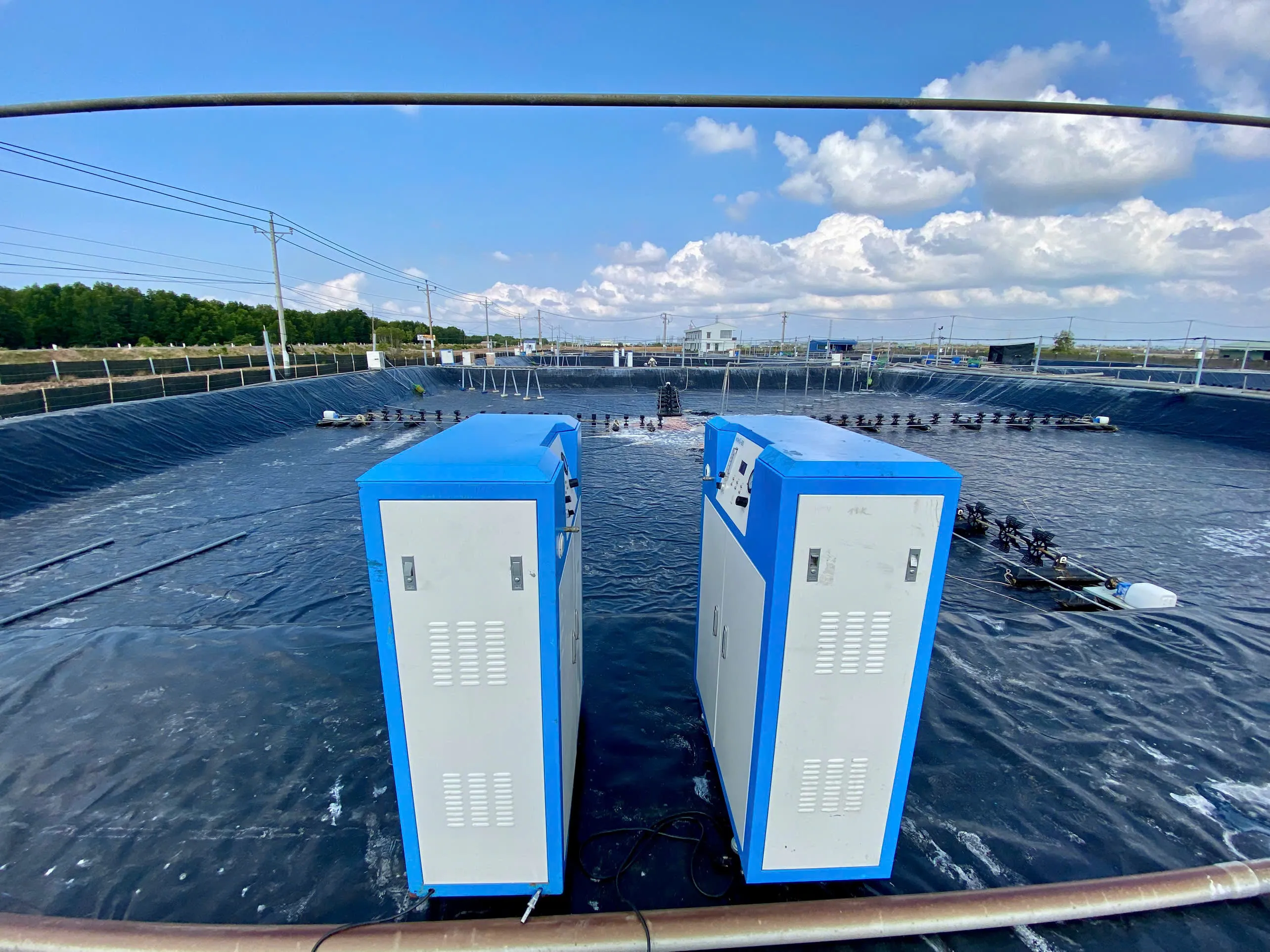
Two pieces of equipment sit pond-side: NovaO2 oxygen generation, which concentrates oxygen from ambient air, and SH-20 nanobubble modules, which disperse it into the pond through the ceramic element. Each installation is commissioned against a four-test capacity SOP with written pass/fail criteria — including a safety cut-off at 13.5 mg/L — on empty ponds, before any animals are stocked.
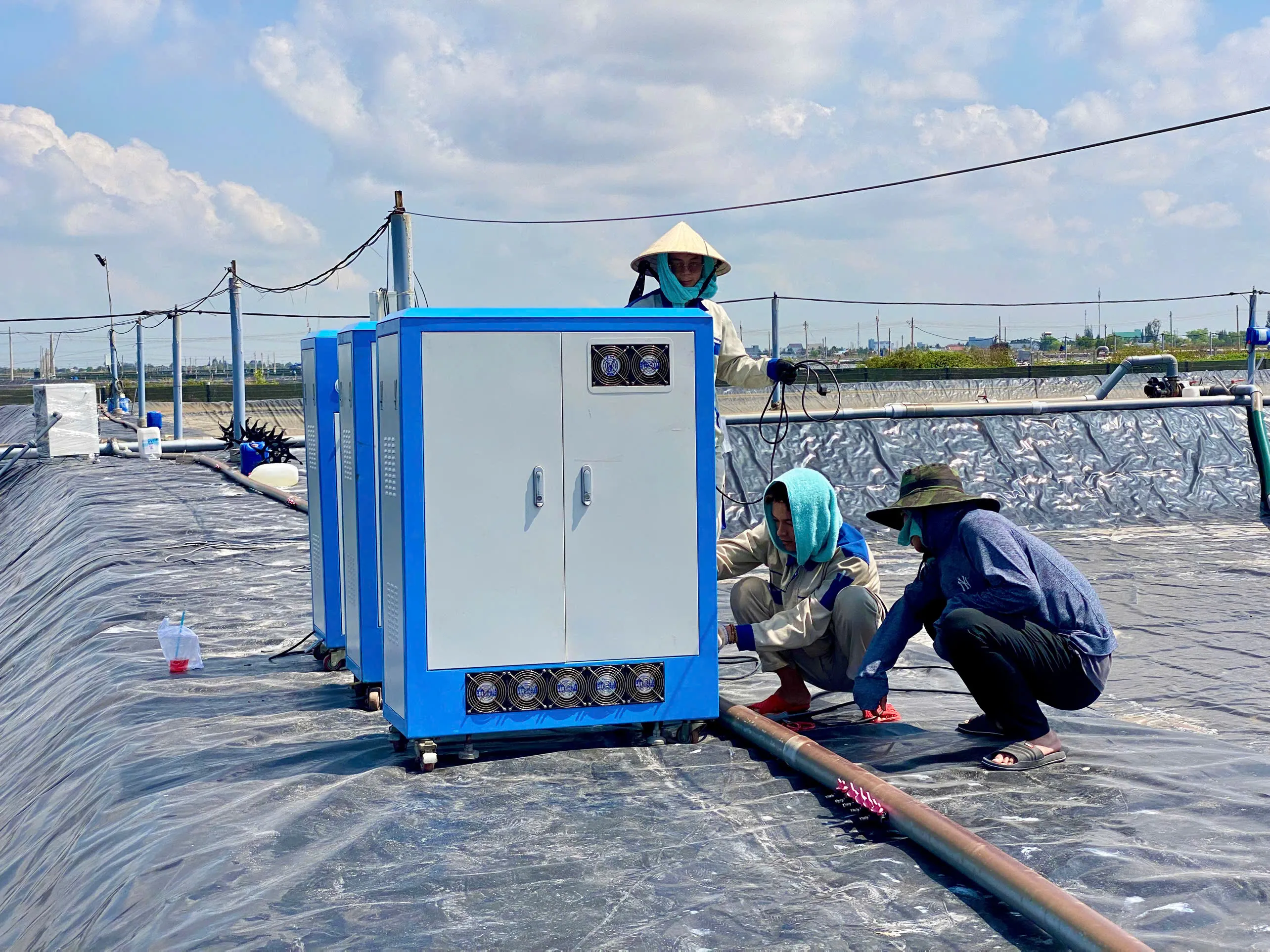
The 3P design
Powerful
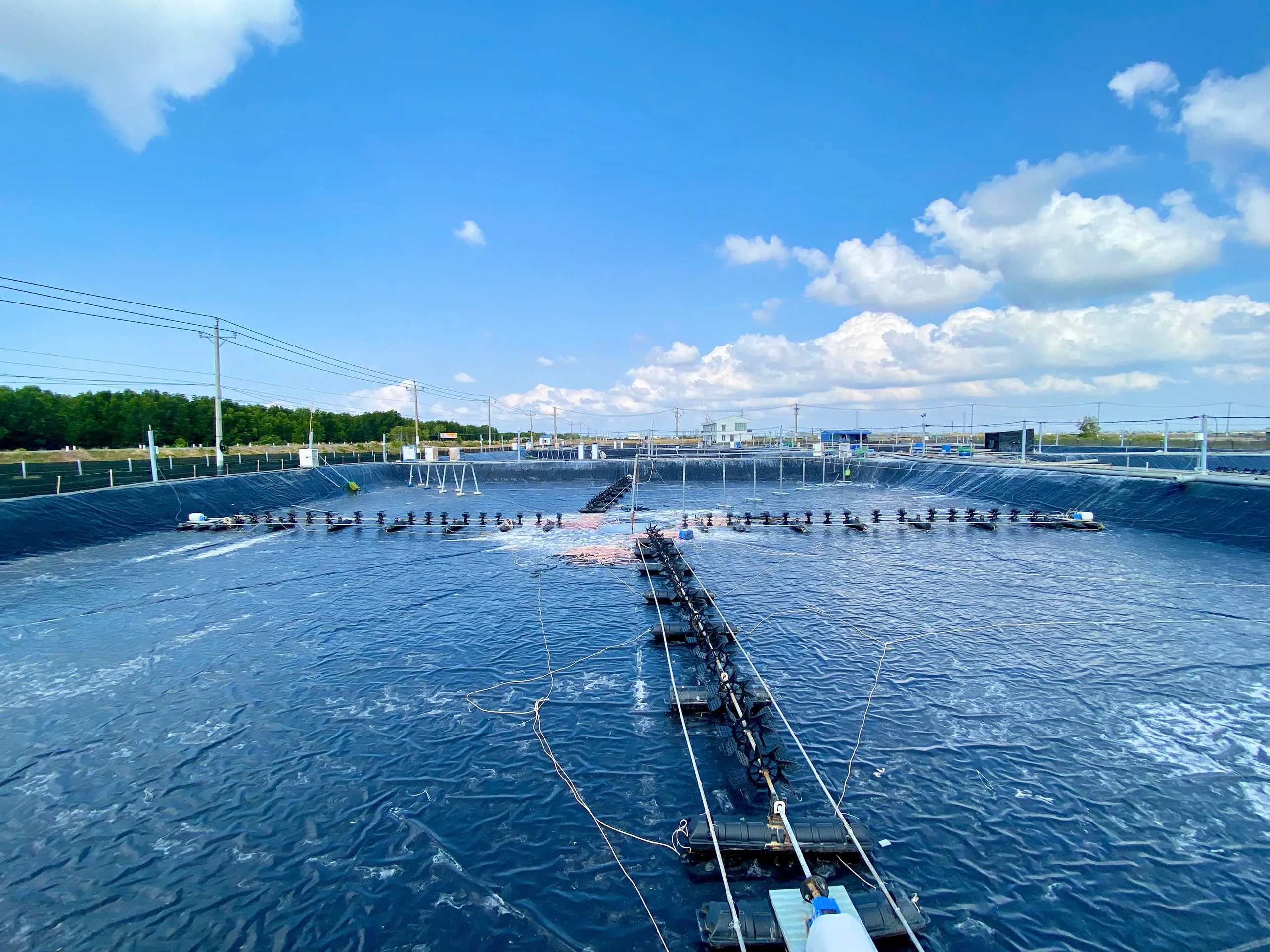
Oxygen is delivered as a controlled setpoint rather than an open-loop clock. In the pilot the nanobubble ponds held a dawn mean of 8.36 mg/L against 5.48 mg/L for paddlewheel control — every one of 113 nanobubble pond-days at or above 6 mg/L.
Powerless
The ceramic element generates bubbles from the flow itself: there is no separate powered bubble-generator in the loop. This is a statement about architecture, not about energy use — the protocol projects the nanobubble system to draw more electricity per kilogram than paddlewheels, and energy is read out at harvest with the other production figures.
Profitable
The commercial case is made from measured production results, not from assumptions. Those results read out at harvest on 29 August 2026; a data addendum will follow.
What we can state today
| Bubble size | Around 100 nm, measured on a nanobubble particle counter |
| Bubble generation | Ceramic element, Japanese-origin patented technology (US 8,919,747 B2), integrated through NovaAquatech's 3P design |
| Oxygen source | NovaO2 oxygen generation, pond-side |
| Dispersion | SH-20 nanobubble modules |
| Commissioning | Four-test capacity SOP, written pass/fail criteria, 13.5 mg/L safety cut-off, run on empty ponds before stocking |
| Dawn DO, pilot | Nanobubble 8.36 mg/L vs control 5.48 mg/L, 31 May – 13 Aug 2026, 277 pond-days |
Every pond is a node
Each instrumented pond carries a probe set for dissolved oxygen, temperature, pH and total ammonia nitrogen, read every 30 seconds. An on-farm gateway — a Raspberry Pi 5 running FastAPI over SQLite — mirrors the sensor feed into a local database so the record survives a connection loss and the farm keeps its own copy of its own data.
A progressive web app gives operators a place for the measurements a probe cannot take: feed, moults, mortalities, water exchange, observations. Environment and operations therefore land on one timeline per pond, which is what later makes the data usable as a labelled training set.
Probe set
DO · temperature · pH · TAN, every 30 s
Farm gateway
Raspberry Pi 5 · FastAPI · SQLite, local mirror
Operator PWA
Manual records: feed, moults, mortalities, exchange
ShrimpOS
Monitoring · threshold alerting · pilot dashboard
Measurement standards
- ISO 5814 for dissolved oxygen
- APHA Standard Methods for nutrients and chlorophyll-a
- WOAH protocols for pathogen PCR
- Dropout rule: a dawn mean below 0.5 mg/L is discarded, applied identically to both groups
- Nothing interpolated; a missing day stays missing
Monitoring, then models
Live today: continuous monitoring, threshold alerting and a pilot dashboard on the farm. In development: event detection and a biological model trained on our own pond data. Roadmap: thirty to fifty ponds, then predictive control.
Bring us a pond. We will bring the instruments.
We would rather show you a dataset from your own water than argue about ours. If you run intensive ponds and want one of them measured properly, that conversation takes fifteen minutes.